What is Optometry? A Beginner's Guide for Students
Remember that moment when you first put on glasses and suddenly realized trees had individual leaves? Or when your little sister stopped squinting at the TV because she finally got the right prescription? That life-changing magic happens because of optometrists – and honestly, it never gets old.
Here’s a reality check that might blow your mind: nearly 2.2 billion people worldwide can’t see properly, and right here in India, over 60 million people are dealing with vision problems. That’s not just statistics – that’s millions of people who need someone like you to help them see their world clearly again.
What is Optometry? Understanding the Optometry Meaning
Okay, let’s get real about what optometry actually is. Forget the fancy medical jargon for a minute. Optometry is basically about being a vision detective and problem-solver rolled into one. The optometry meaning is simple: you’re the person who figures out why someone can’t see properly and then fixes it.
But here’s where it gets interesting – optometrists catch things that would otherwise go unnoticed. I’m talking about spotting diabetes before someone even knows they have it, or catching glaucoma before it steals their sight forever. This is why optometry definition in healthcare is so crucial. You’re not just prescribing glasses; you’re literally saving people’s vision and sometimes their lives.
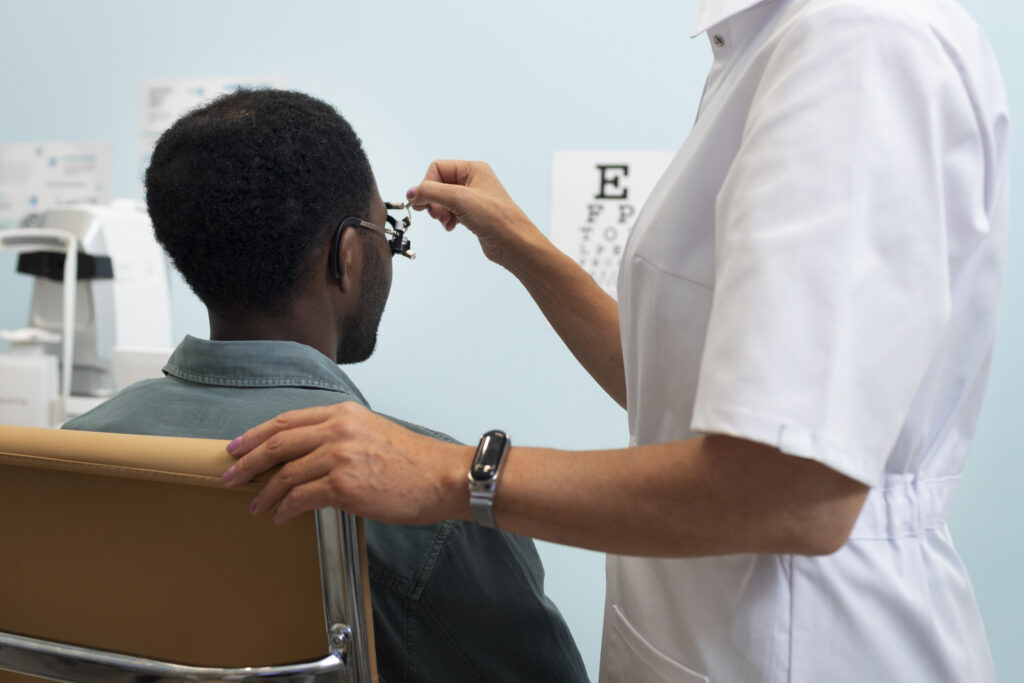
What I love about this field is how every day brings something different. One minute you’re helping a nervous first-grader get their first pair of glasses, the next you’re explaining to a college student why their eyes feel tired after staring at screens all day. It’s problem-solving with a human touch, and trust me, that combination never gets boring.
The Role of Optometry in Healthcare
Let me paint you a picture of what optometrists actually do all day. They’re like the Swiss Army knife of eye care – they can handle almost everything that walks through their door.
Your typical optometrist starts the morning doing comprehensive eye exams. Sounds routine, right? Wrong. Each exam is like solving a puzzle. Maybe they’ll discover that a student’s “learning difficulties” are actually vision problems, or they’ll spot early signs of macular degeneration in someone who came in for a simple glasses update.
The coolest part? Optometrists often become accidental heroes in people’s overall health journey. I’ve heard countless stories of optometrists who detected high blood pressure or diabetes during routine eye exams. Eyes really are windows to your health, and these professionals know exactly what to look for.
Optometry Course Options and Requirements
Alright, let’s talk about the practical stuff – how do you actually become an optometrist? The good news is that the path is pretty straightforward, and you don’t need to be a genius to get there.
Optometry Course in India: Structure and Duration
India has really stepped up its game with optometry education in recent years, and honestly, it’s about time! The opportunities are growing faster than you can imagine.
Your journey starts with the Bachelor of Optometry (B.Optom), which is a four-year program. Now, I know four years sounds long when you’re 17 and eager to start earning, but trust me, it flies by. This optometry course covers everything from basic eye anatomy (which is fascinating, by the way) to advanced diagnostic techniques.
The best part? You don’t just sit in classrooms memorizing textbooks. You get hands-on experience working with real patients under supervision. I still remember talking to a recent graduate who told me about the first time she helped a elderly man see clearly after years of struggling with cataracts. She said it was better than any paycheck.
If you’re the type who wants to specialize further, there’s the Master of Optometry (M.Optom) – that’s two more years focusing on things like children’s eye care or helping people with severe vision loss. Some universities even offer integrated programs that combine both degrees, which is pretty convenient.
Basic Requirements and Eligibility
Here’s the reality check – you need to have studied science in your 12th grade. Most colleges want around 50-60% aggregate marks, though this varies. Don’t stress if you’re not a straight-A student; passion and dedication matter more than perfect grades.
Some colleges have entrance exams, others just look at your marks. Either way, what really matters is whether you have steady hands, enjoy helping people, and can handle detailed work. If you’re the kind of person who gets satisfaction from solving puzzles and genuinely cares about others, you’re probably going to love this field.
Career Opportunities in Optometry
This is where optometry gets really exciting – the career options are incredibly diverse, and there’s honestly something for every personality type.
Hospital and Clinical Practice
Working in hospitals means you get to handle the most interesting cases. You’ll work alongside doctors, nurses, and other specialists, dealing with everything from routine check-ups to post-surgery care. The job security is excellent, the benefits are usually great, and you get to be part of medical teams that literally save people’s sight.
Plus, hospitals often have the latest equipment and technology. If you’re someone who gets excited about working with cutting-edge diagnostic tools, this might be your calling.
Retail and Optical Chains
Don’t underestimate the retail side – it’s where a lot of the action is happening right now. Companies like Lenskart, Specsmakers, and Titan Eye Plus are expanding like crazy across India, creating thousands of jobs for optometrists.
What I love about retail optometry is the immediate gratification. You help someone find the perfect frames, sort out their prescription, and watch them light up when they can see clearly. The salaries are competitive, the training is thorough, and there are real opportunities to climb the corporate ladder.
Private Practice and Research
Opening your own practice is like being an entrepreneur, but in healthcare. You set your own schedule, choose your patients, and build something that’s truly yours. Yes, it requires business skills beyond your clinical training, but the financial rewards and personal satisfaction can be incredible.
For the academically minded, research positions in universities offer the chance to push the boundaries of what’s possible in eye care. You get to teach the next generation while discovering new treatments and technologies.
Conclusion: Your Future in Optometry Awaits
Look, I’ve spent years working with different healthcare professionals, and I can honestly say that understanding optometry opens up one of the most rewarding paths you can choose. This isn’t just about job security or decent pay – though both are definitely there. It’s about waking up every day knowing that your work directly improves people’s lives.
The numbers don’t lie – India’s growing population means optometrists will always be in demand. Whether you’re drawn to the high-tech equipment, the personal connections with patients, or the variety of career paths available, optometry has something that’ll match your interests and personality.
I’ll leave you with this thought: in a world where so much work feels disconnected from its impact, optometry offers something rare – the chance to see the immediate, positive difference you make in someone’s life. Understanding what is optometry is just the beginning. The real question is: are you ready to help people see their world more clearly?
Your future patients are out there right now, struggling with vision problems, waiting for someone exactly like you to help them. The only question is: will that someone be you?
Address List
- Subodh Park, Kolkata, West Bengal, India
- + 91 70036 44356
- soumenopt@gmail.com
THE HEALTH ONE
Health One empowers optometry students and professionals through guided admissions, clinical training, and career support — bridging education with real-world opportunities in vision care.
JOIN OUR COMMUNITY